HIPAA Certification for Healthcare Professionals & Workers
Healthcare organizations and their employees are responsible for safeguarding sensitive medical information. HIPAA certification is more than just a requirement — it's proof that healthcare professionals and workers are prepared to protect patient privacy, uphold data security, and handle Protected Health Information (PHI) responsibly. This page explains why HIPAA training and certification matter, what's included in the course, and how compliance connects to broader healthcare regulations like the Stark Law and Anti-Kickback Statute.







-
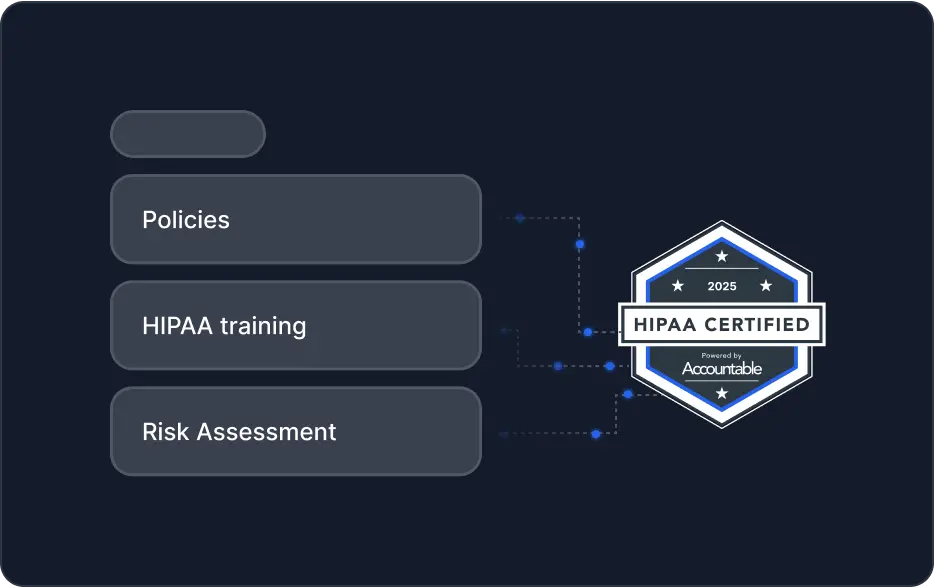
Compliance
HIPAA compliance is the foundation of modern healthcare operations. Whether you're a clinician, administrator, or part of a support team, certification ensures you understand how to properly manage patient records, report incidents, and follow required policies.
For organizations, compliance isn't optional — it reduces legal risk, protects against fines, and builds trust with patients. For workers, certification demonstrates accountability and professionalism in handling sensitive information. -
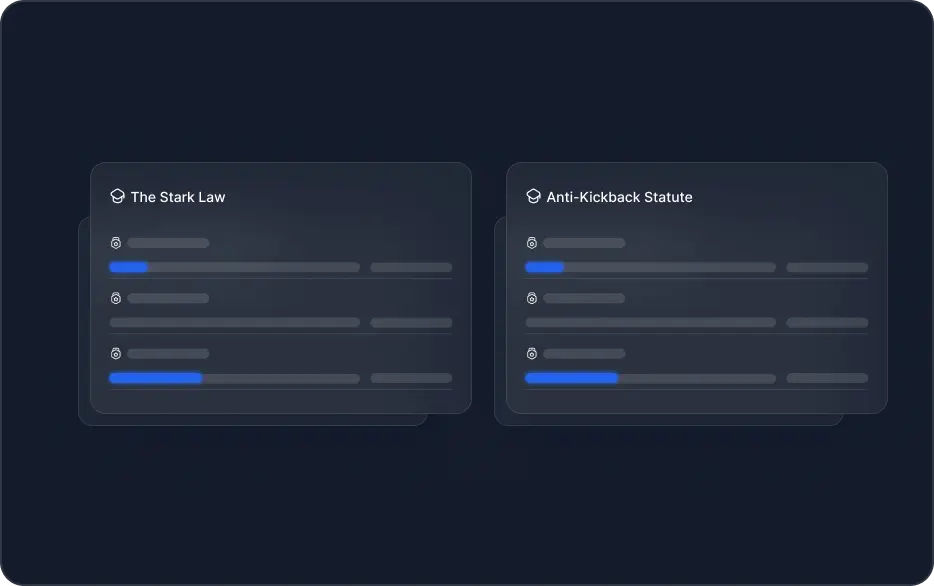
Stark and Anti-Kickback Statutes
Healthcare professionals need to understand that HIPAA compliance often intersects with other regulations. The Stark Law and the Anti-Kickback Statute are two key examples. Both address financial relationships and referrals, ensuring that care decisions are made for the patient's benefit — not personal or organizational gain.
While HIPAA protects data and patient privacy, Stark and Anti-Kickback focus on ethical business practices. Together, these rules form a framework that healthcare workers and lawyers alike must recognize to prevent compliance violations. -
Lawyers and Legal Considerations
Lawyers play a critical role in interpreting healthcare regulations and guiding organizations through compliance challenges. From drafting Business Associate Agreements (BAAs) to advising on data-sharing practices, legal professionals ensure healthcare entities meet HIPAA requirements while also navigating related laws.
Healthcare workers benefit when their organizations invest in legal expertise. A strong compliance program reduces the risk of enforcement actions, fines, or lawsuits — and gives staff confidence in their daily work. -
HIPAA Certification Course
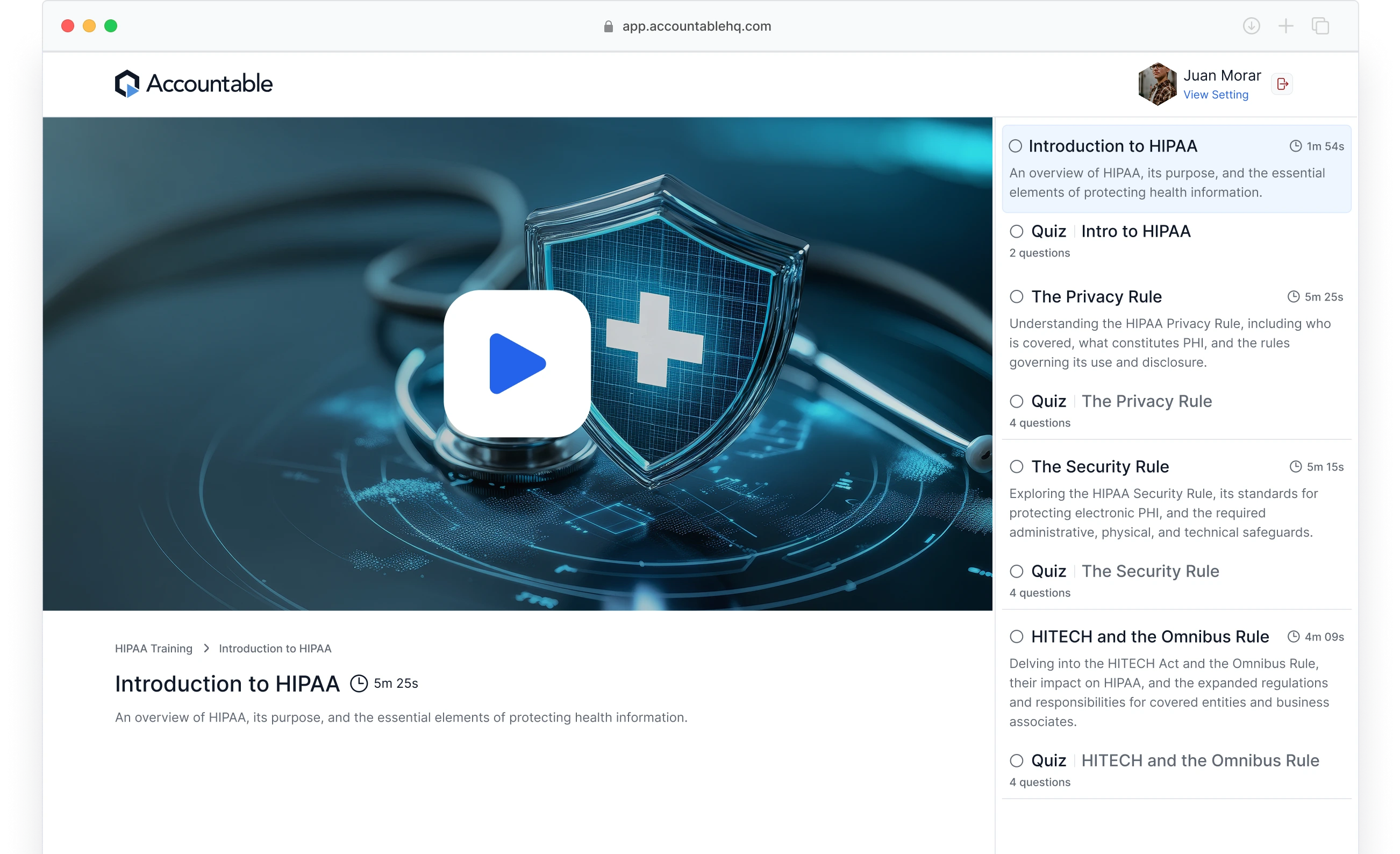
A HIPAA certification course equips healthcare workers with the knowledge they need to protect patient information. The training typically covers:
-
Patient Privacy & Data Security: Understanding PHI and the safeguards required.
-
Policies and Procedures: How to follow internal rules that support compliance.
-
Incident Reporting: Steps to take when data breaches or privacy issues occur.
-
Intersections with Other Laws: Guidance on how HIPAA compliance relates to Stark and Anti-Kickback rules.
Completing the course leads to certification — a credential that demonstrates both individual and organizational commitment to compliance.
-
-
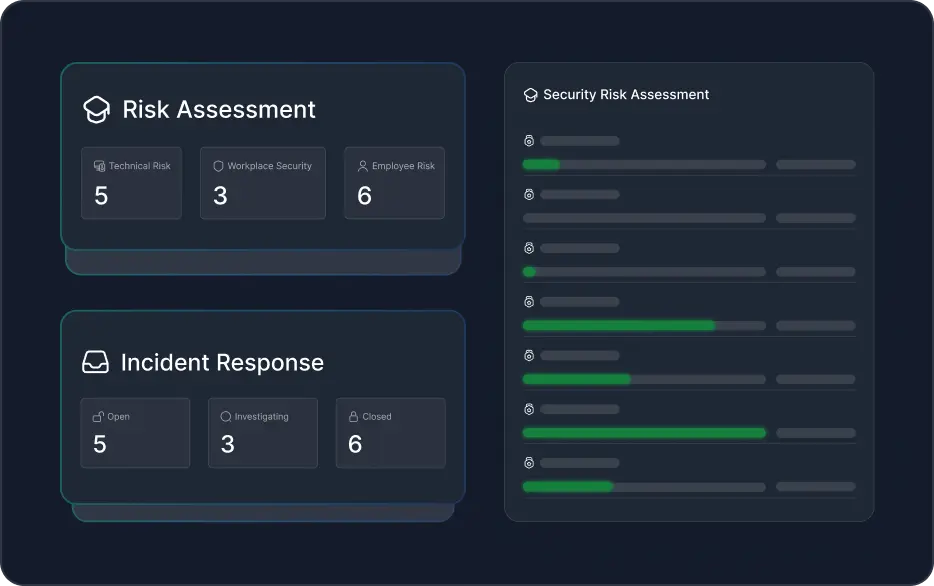
HIPAA Training for Healthcare Professionals
Healthcare professionals must receive ongoing HIPAA training to stay current. Regulations evolve, technology changes, and new risks emerge. By maintaining up-to-date knowledge, staff can better protect PHI and avoid costly mistakes.
Training is not only about following rules — it's about building a culture of responsibility. When every worker understands their role in compliance, patients feel safer, and organizations strengthen their reputation.
Prove your HIPAA compliance with confidence
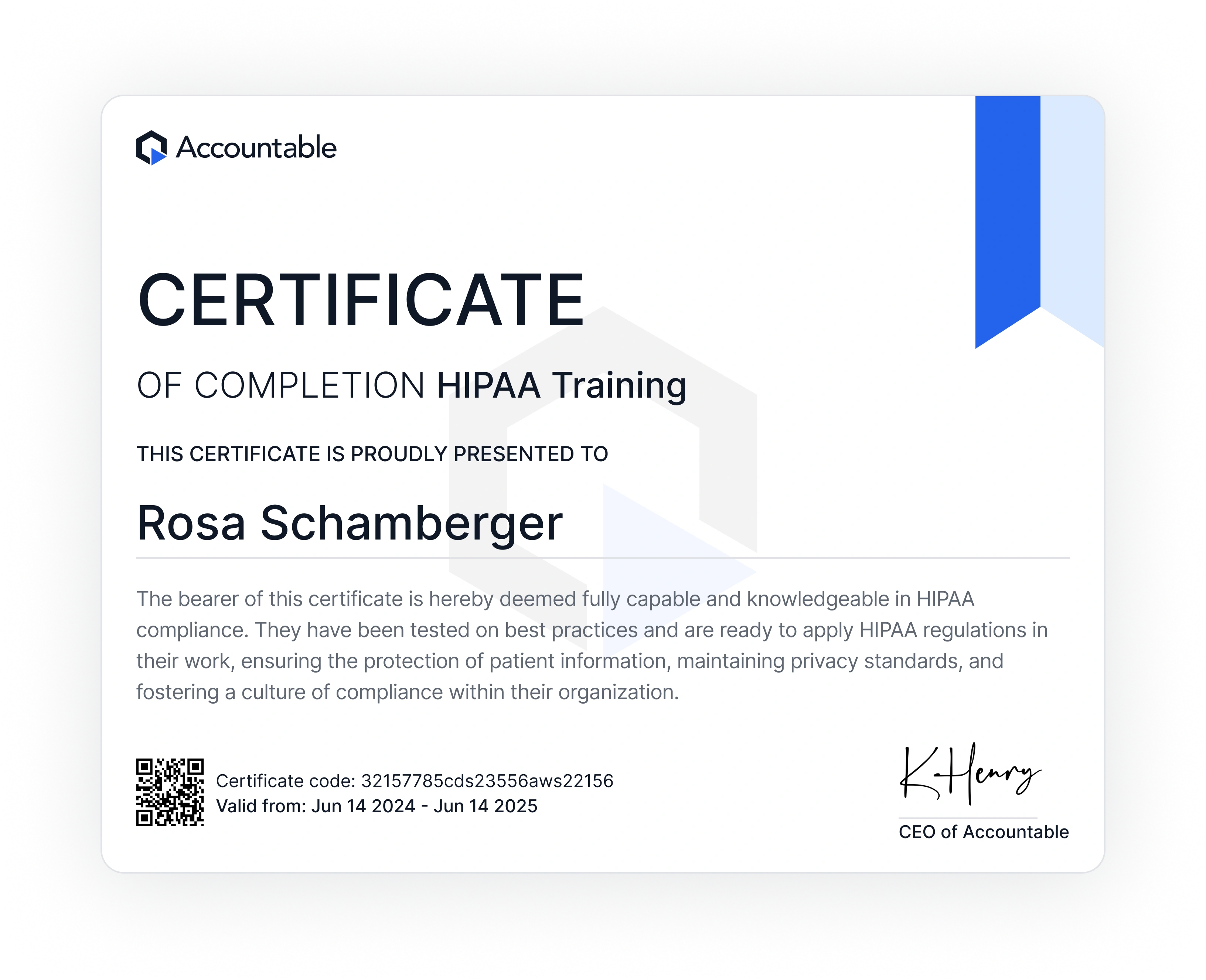
Show clients, partners, and regulators that your business takes compliance seriously. Upon completing the process, you'll receive a HIPAA Certificate backed by Accountable - an official recognition of your organization's commitment to data privacy and security.

125,000+ Happy Certified Employees

Building Trust
HIPAA certification ensures healthcare professionals and workers are prepared to safeguard patient privacy and data security. By understanding compliance, recognizing the impact of the Stark and Anti-Kickback Statutes, and completing a structured course, individuals can demonstrate their commitment to protecting PHI. For healthcare organizations, investing in HIPAA training builds resilience, trust, and long-term compliance.
Features to power any privacy, security, and risk management program
Compliance
Compliance Copilot New
AI agent that takes action
Security Risk Assessment
Identify & mitigate risks
Remediation Plan
Track corrective actions
Employee Dashboard
Monitor compliance progress
Policy Management
Centralized policy control
Data Inventory Management
Track & secure data
Policies & Procedures
Simplify compliance policies
Privacy Compliance Software
Automate privacy policies
Data Flow Mapping
Map PHI flows with AI
Federal Exclusion Screening
Automated OIG/LEIE screening
Compliance Hotline New
AI-powered incident reporting
Employee Training
HIPAA Training
Ensure HIPAA compliance
Security Awareness Training
Prevent cyber threats
Sexual Harassment Training
Foster workplace safety
Fraud, Waste, & Abuse Training
Learn best practices
Bloodborne Pathogens Training
Prevent exposure
Custom Training for Companies
Tailored employee learning
Vendor & Contract Management
Vendor Management System
Manage vendor compliance
Third-Party Security Monitoring
Track vendor security
Document Management System
Organize critical files
BAA Management System
Simplify agreement tracking
E-Signature
Secure digital signatures
Customer Trust
Incident Management
Report & resolve issues
HIPAA Seal of Compliance
Verify HIPAA compliance
Privacy Center
Comply with DSAR laws
Trust Center
Showcase compliance publicly
Data Breach Monitoring
Detect & respond to breaches
Multiple Location Management
Centralized franchise compliance
Frequently Asked Questions
Can't find the answer you're looking for? Please reach out to our team.